Freckle, 2026
There was a time when childhood meant disappearing. You left the house after breakfast, rode somewhere your parents didn’t know about, climbed something you probably shouldn’t have, and came home when it got dark. You left the realm of adults behind, and much of the world belonged to you.
Over the last few decades, that space has quietly collapsed. Children are more supervised in physical space than perhaps any generation before them, while simultaneously being given access to an online world that even adults struggle to navigate. Risk was removed from the playground and introduced through the screen. Something about that trade felt backwards.
Video by Eric Perini (Dir) & Cory Fraiman (DP)
In 2025, Sam Terris came to us with a different proposition. What if technology and childhood weren’t fundamentally incompatible? What if it could give kids the freedom to disappear again, and parents the confidence to let them?
To us, this was an unusually optimistic proposition. Sam had begun to call his vision Freckle, and together we started imagining the world that could grow around it.
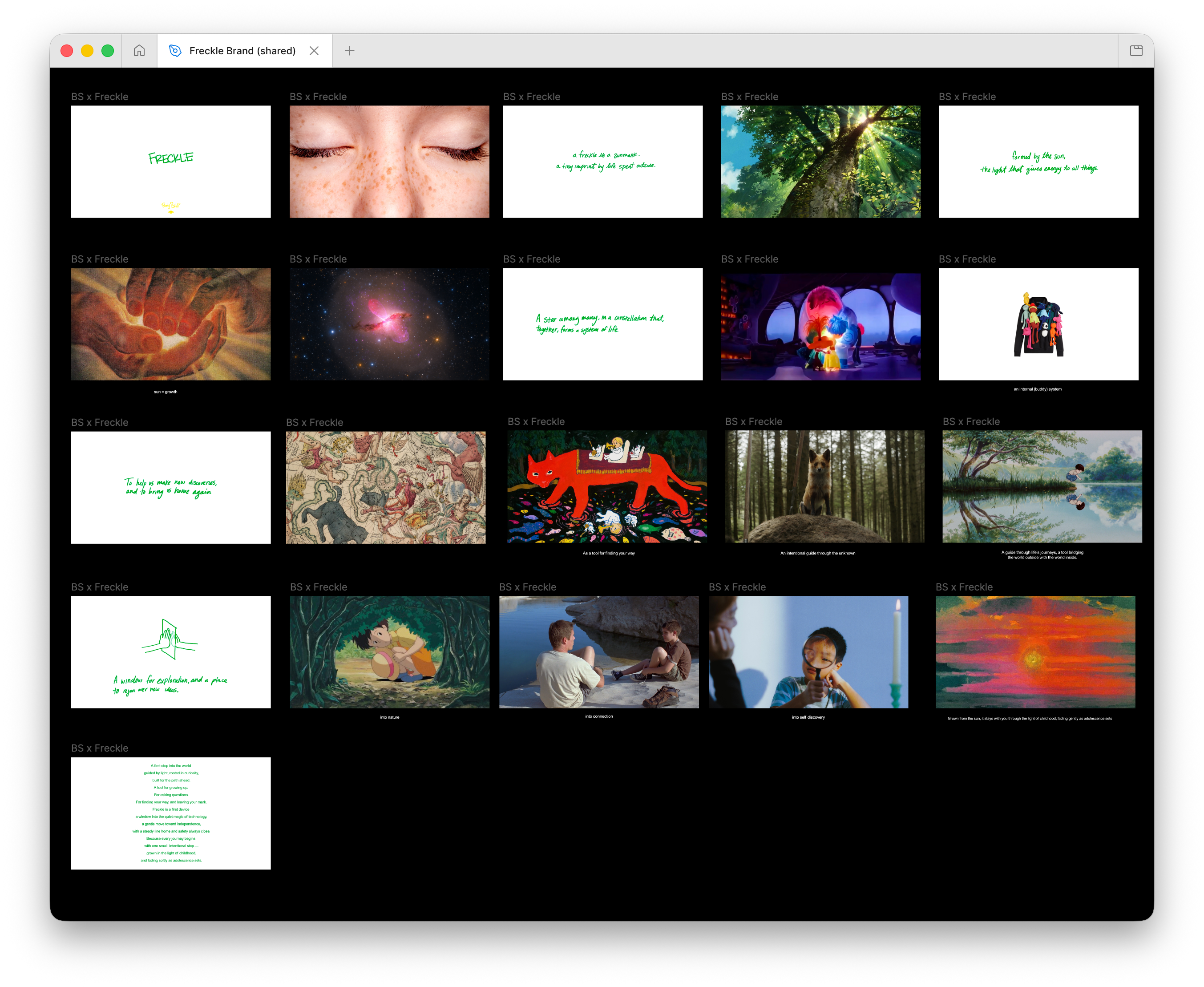
The name evoked a mark on the skin, forged from time spent outside in the sun. We became interested in physical objects that cultivated a tactile sense of discovery and imagination, starting with the malleability of Play-Doh. The undeveloped infinite potential of the material felt appropriate to begin building the language of the brand on. Paired with the name, we developed a wordmark with the motif of the freckle replacing the usual terminal of the lowercase “r.”
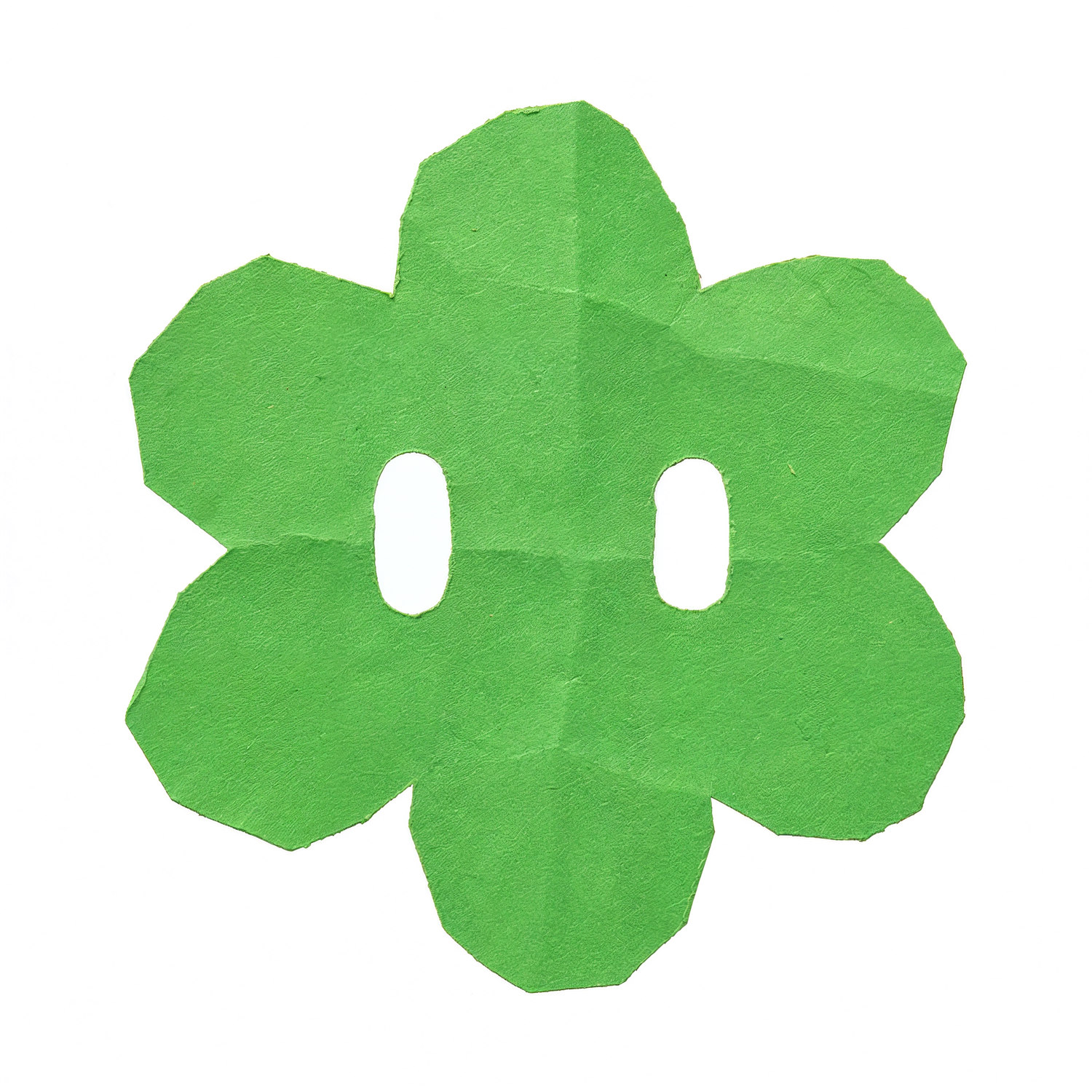
This motif extended into a Freckle character that also resembled a leaf. We chose green as a reminder of the world where freckles are earned.
THE WORLD IS THE APP
As we extended this to the experience of the screen, we found the challenge especially interesting: how do you make software belong to a universe defined by physicality?
We started with a suite of core icons, and built a library of buttons and UI elements.
The 1990s video game, The Neverhood, was an inspiration to build an entire universe constructed from clay. Not everything worked, but we continued to explore the line where the digital world could materialize through physical artifacts that weren’t infinitely reproducible vectors.
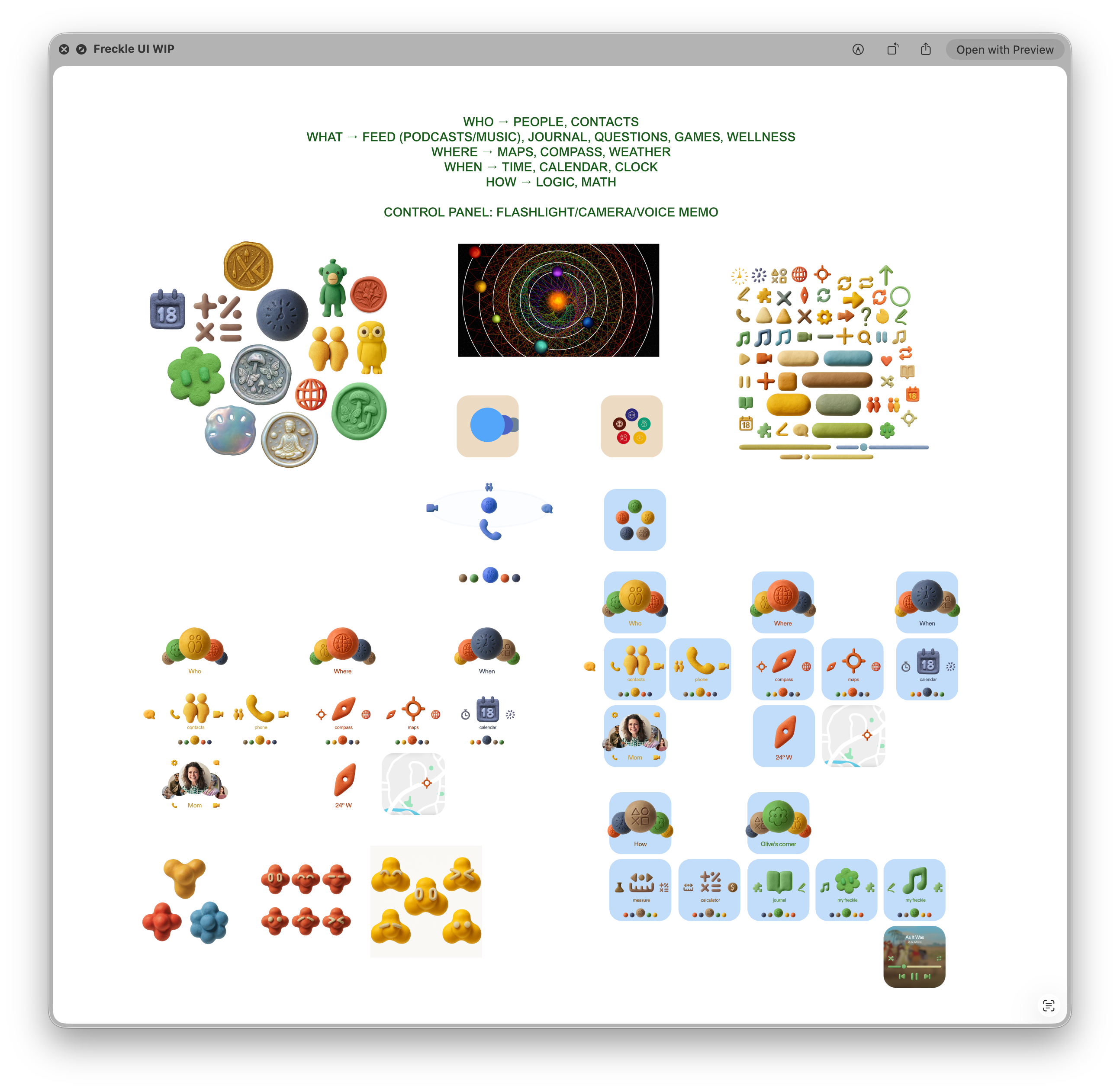
We were drawn to the fingerprints, rounded edges, slight asymmetries, intuitive weight of something that can be squashed, stretched, rebuilt or turned into something else.

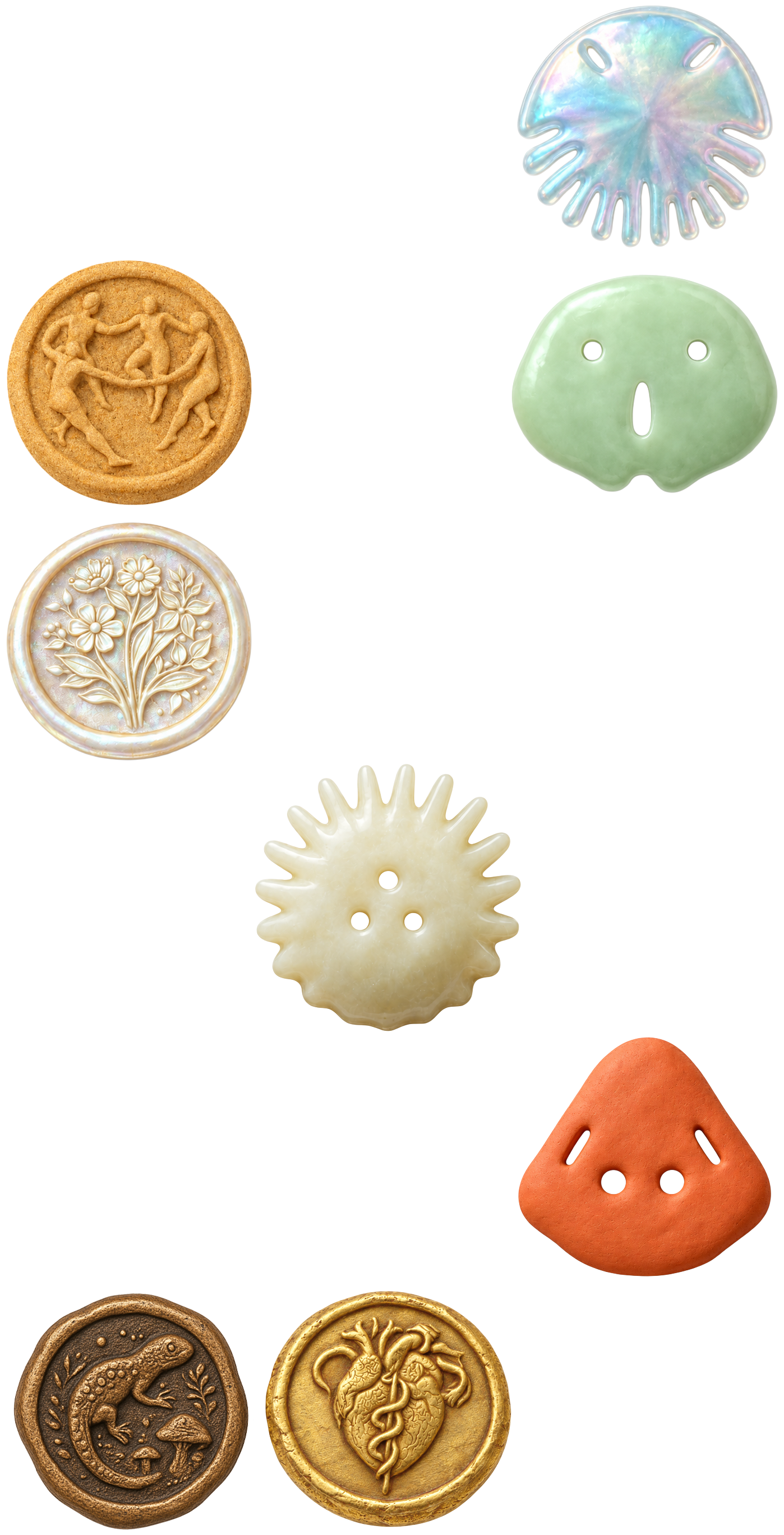
We looked at various kinds of patches, pins, and charms as an extension of this material language. Things that can be carried, collected, decorated, traded, lost, scratched and personalized. Working with the Freckle team we designed and visualized these objects to be digital medallions for time spent exploring outside.
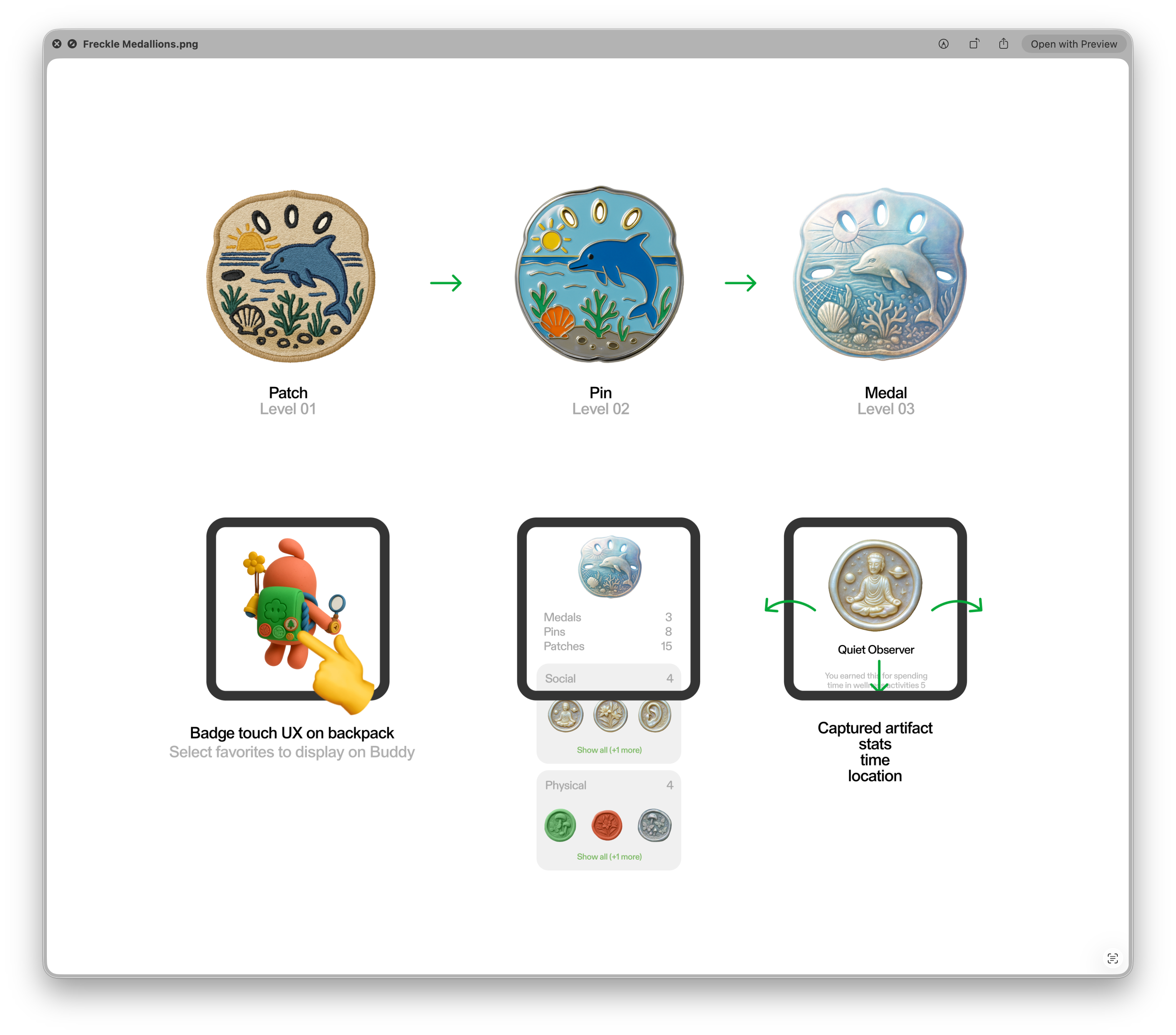
DIGITAL EXPERIENCE
What eventually became ClayOS was born from a desire to make the core philosophy of Freckle experiential. It also gave us a way to think about intelligence that continued to pull on the thread. While Freckle uses AI, we didn’t want intelligence to manifest as an omniscient abstract chatbot inside the device. We felt its role needed to be specific and embodied, made from the same world as the rest of ClayOS.
ClayOS carries the physical playfulness of Freckle onto the screen. The experience centers on a character made of clay, with the familiar layers of a phone interface removed.
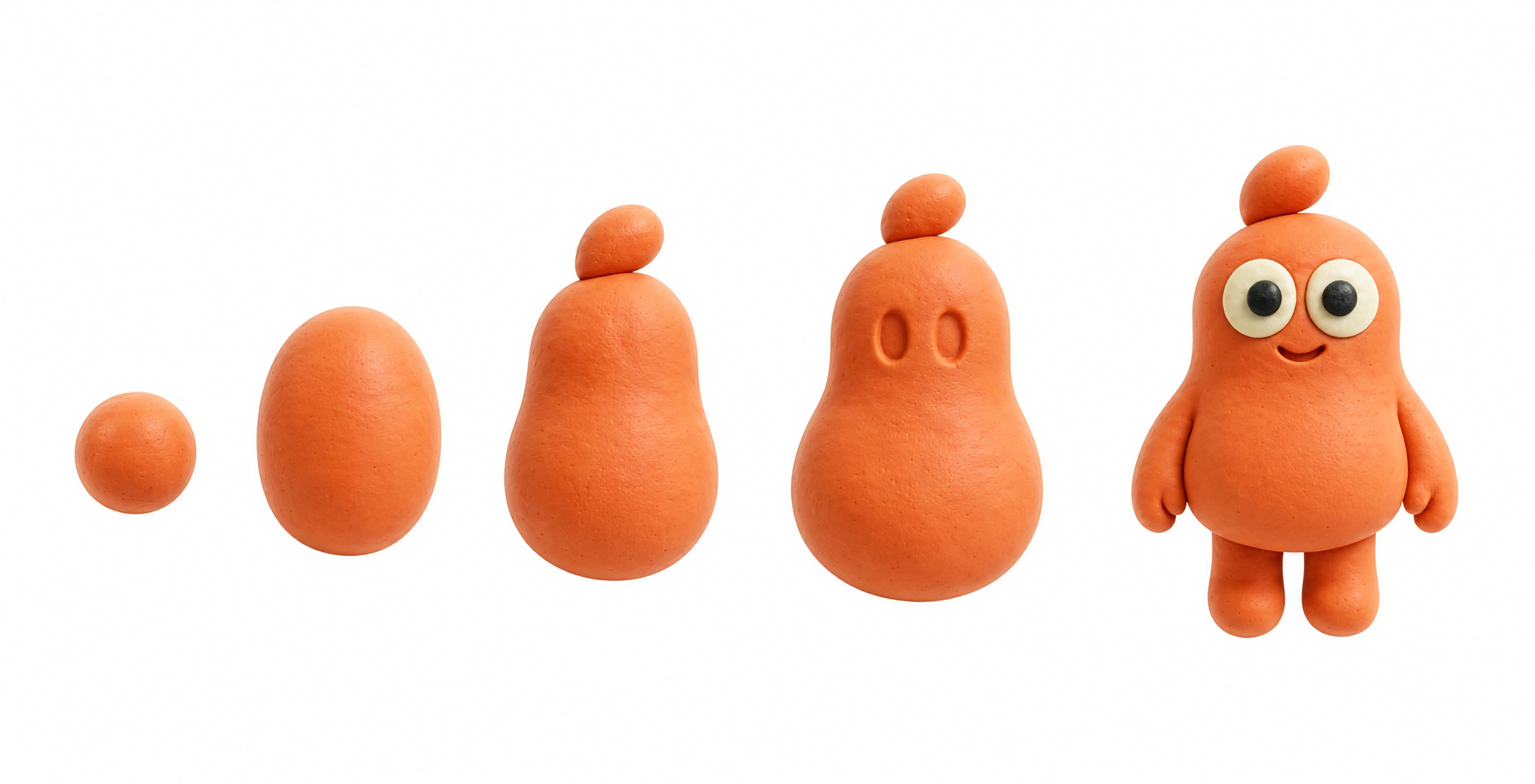
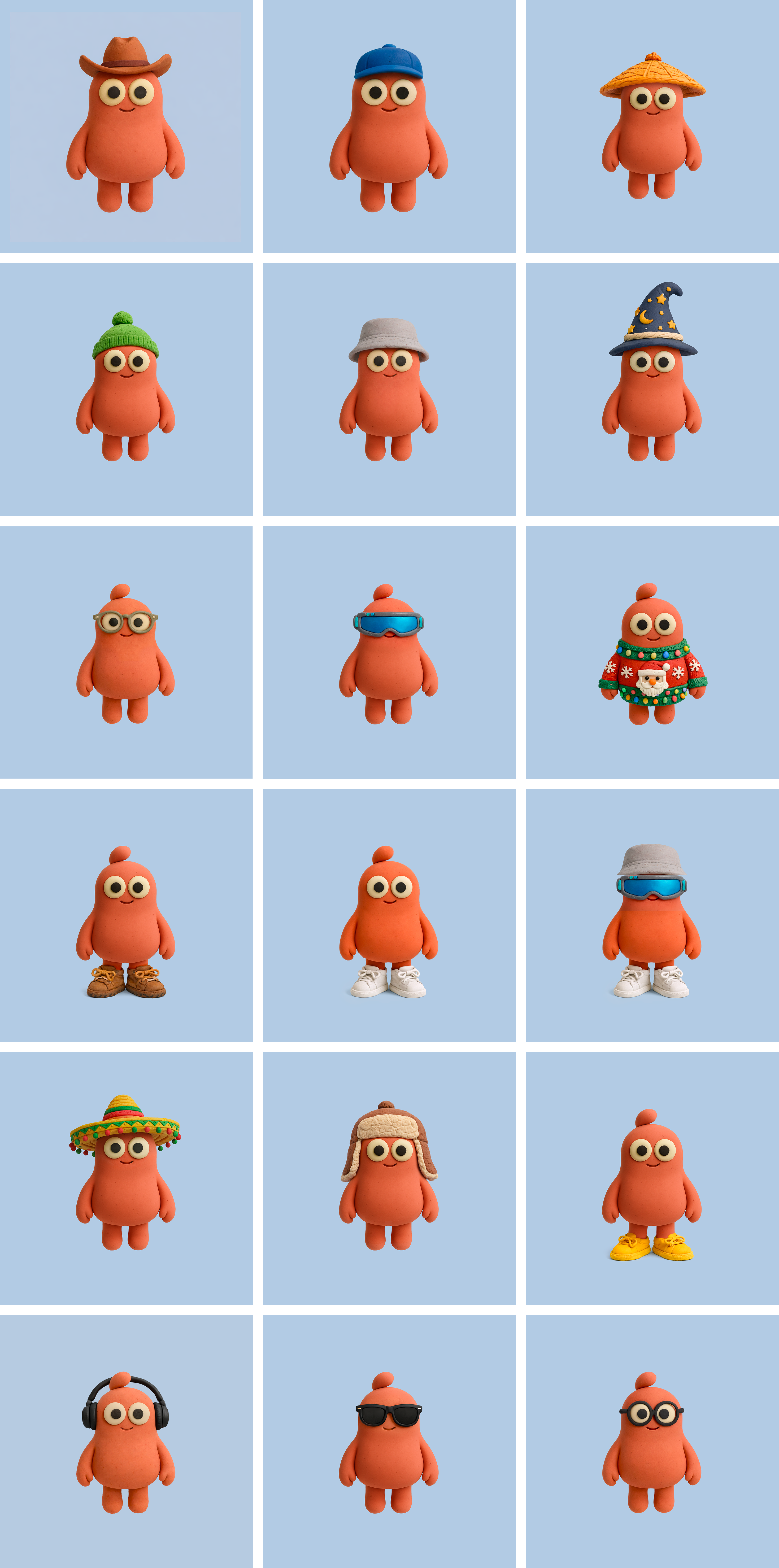
Icons and navigation are formed from clay too, creating a world that draws on early memories of molding Play-Doh and making things by hand. Asking questions, taking photographs, and keeping in touch with family and friends become part of a tactile visual world, inviting the same curiosity and experimentation as the objects that inspired the device.
INDUSTRIAL DESIGN
The square display was an early engineering constraint, but it felt like a natural extension of the building-block language we had been developing. The internal architecture determined the object’s basic volume, allowing us to treat the camera, speakers, microphone, flash, and buttons as graphic elements that gave its functional requirements a distinct logic and sense of harmony.
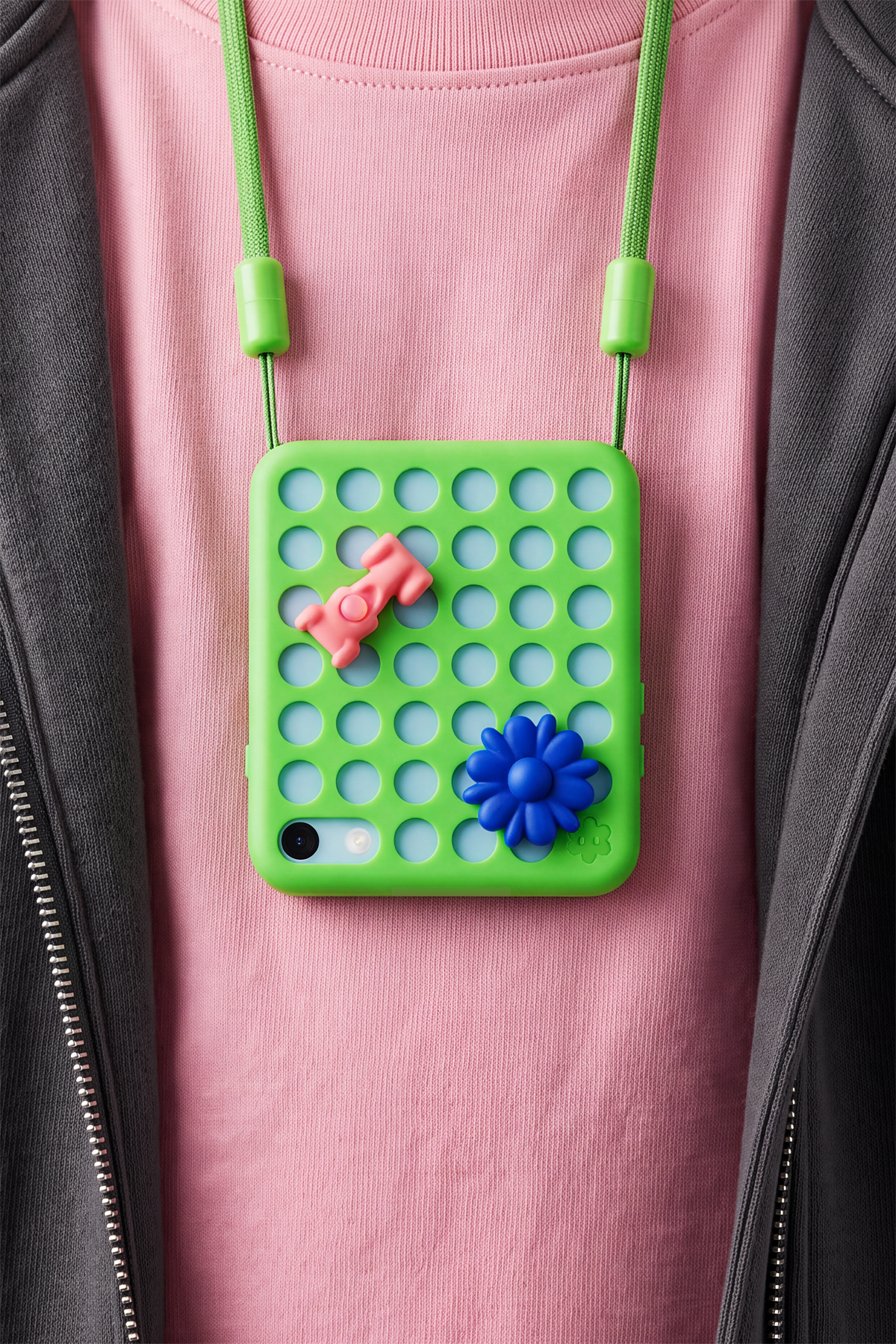
Polycarbonate felt like a natural choice for the enclosure, balancing durability and cost. A highly polished finish gave the surface a candy-like quality, catching the eye and inviting you to pick it up. This also created a contrast with the matte TPU case that would protect the device.
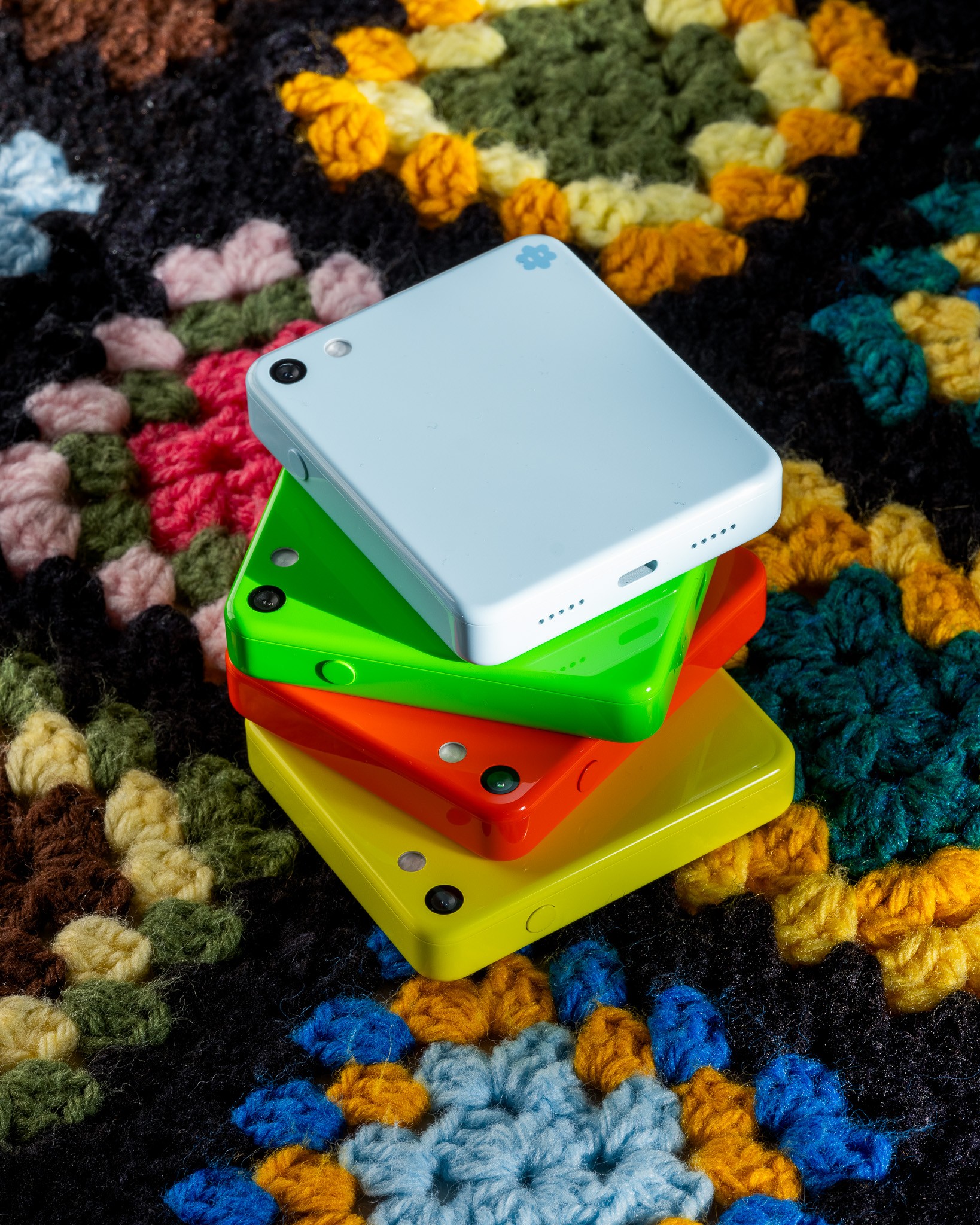
Image by Charlie Schuck
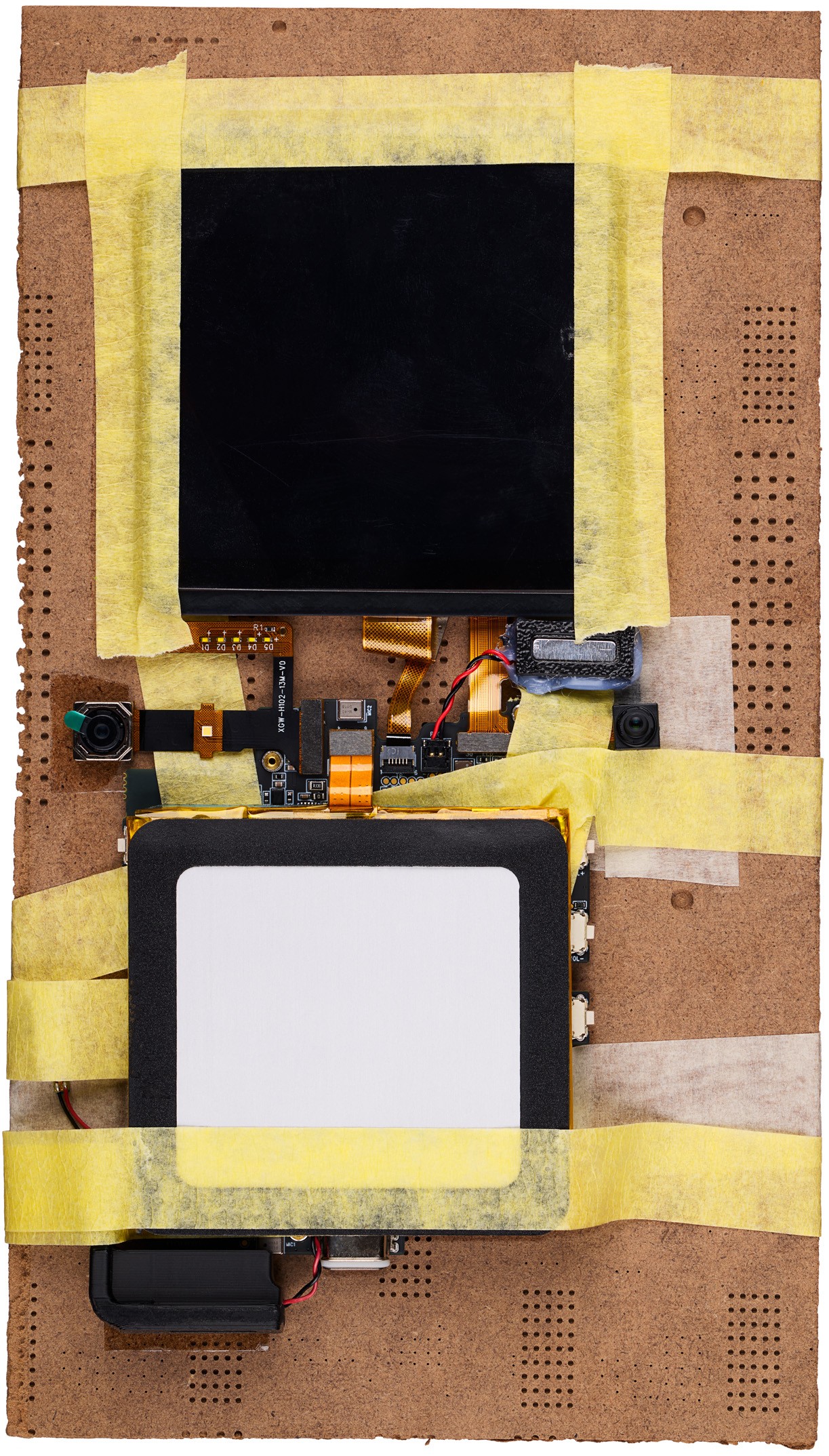
Freckle prototype, image by Charlie Dixon
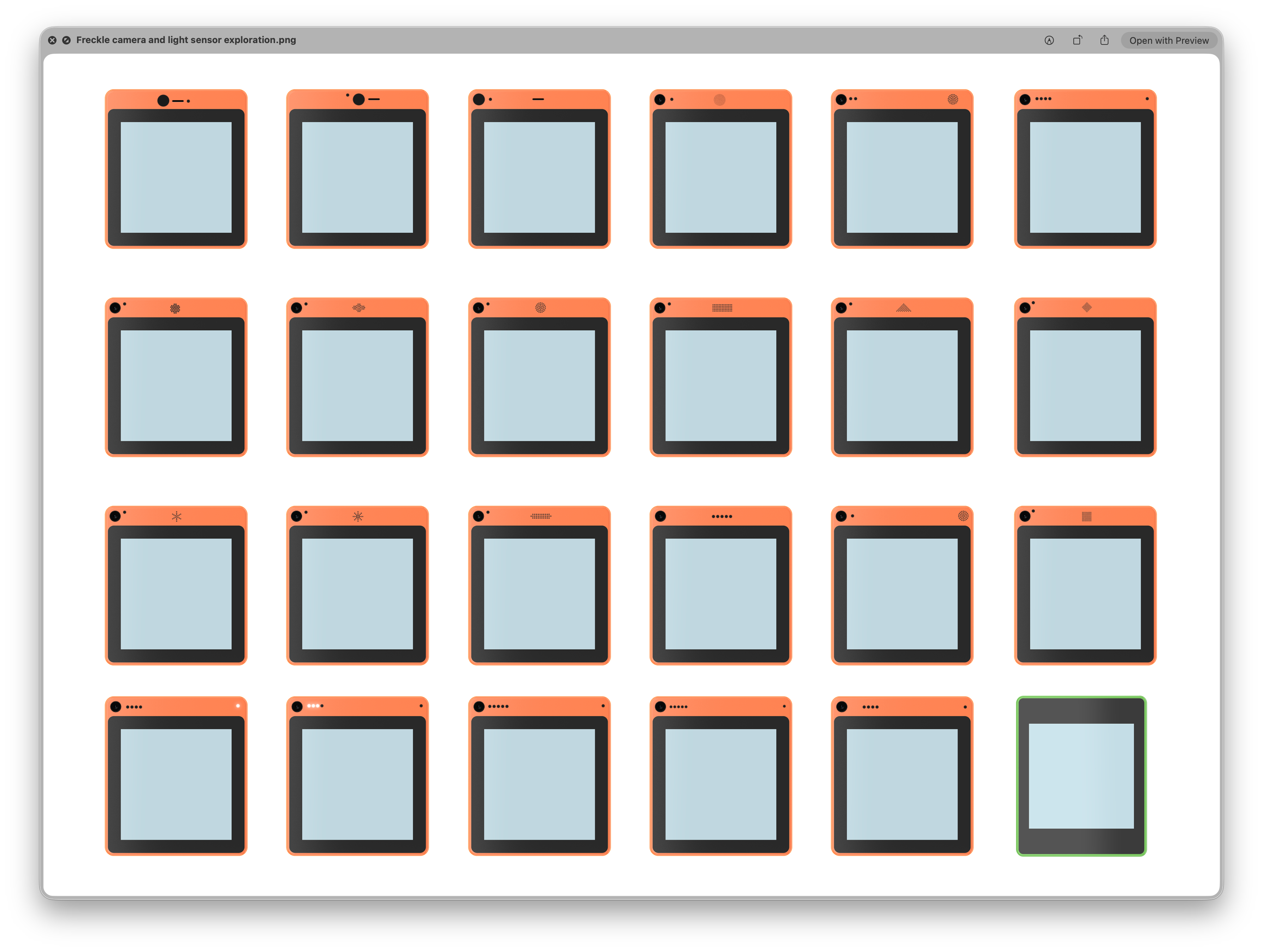
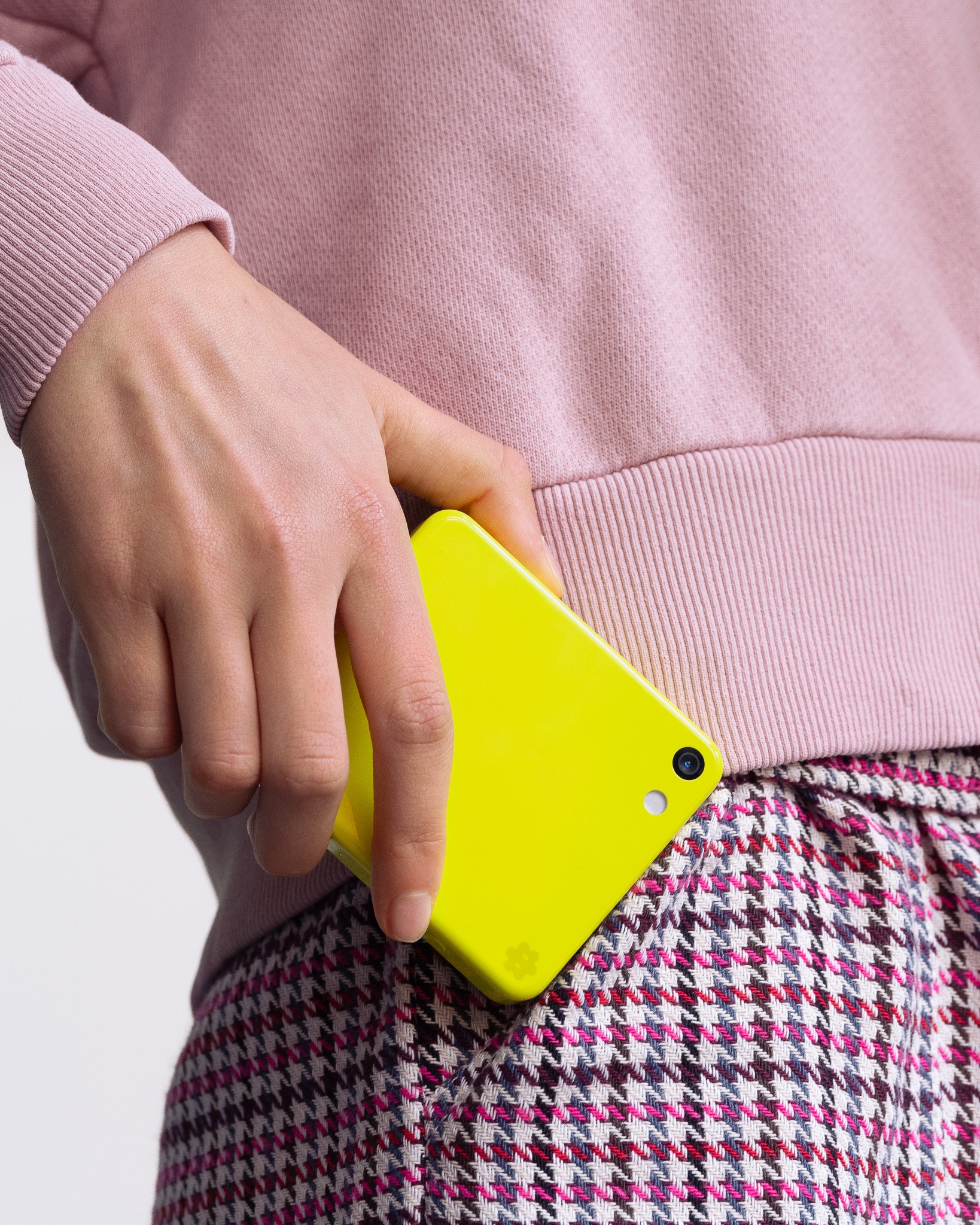
Image by Charlie Schuck
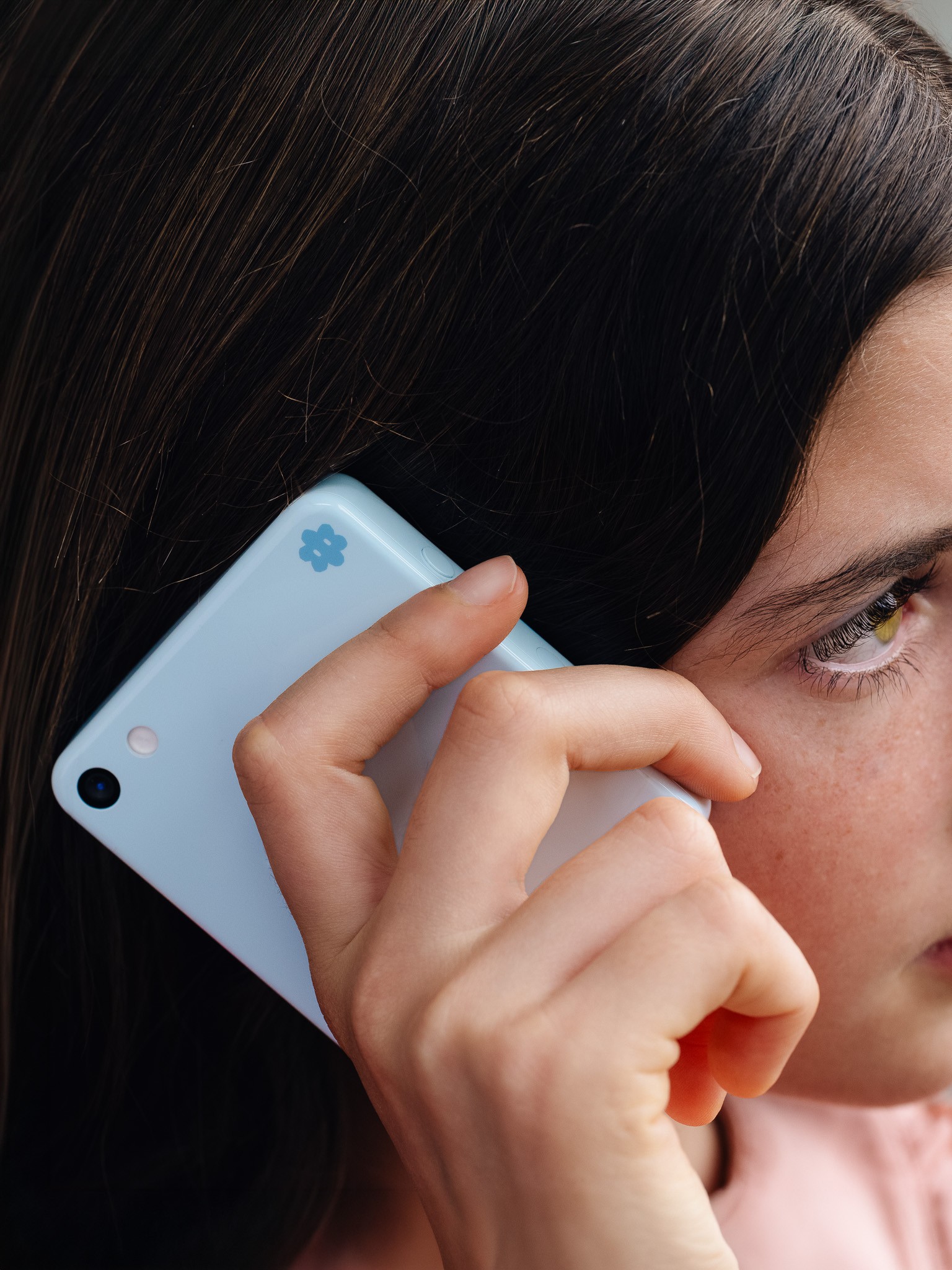
Image by Charlie Schuck
TOY AS EQUIPMENT
Early on, we knew that we wanted the value of the product to exist beyond the glass, not behind it. So as we continued to build the world of accessories around the device, we knew the product needed to feel like a piece of equipment, like binoculars that hung around your neck because you expect to keep moving. We decided to give the device a similar lanyard so it could live on the body rather than disappear into a pocket. We thought about patches and pins as we looked at the case of the device becoming a substrate for accumulation.
For Freckle’s first photoshoot, we worked with our friend Charlie Schuck to bring the world we had been building outside. We wanted to carry the same sense of curiosity, physicality, and play into the photography, treating the device as a piece of equipment for exploring the world. The shoot was an opportunity to show how Freckle could belong to childhood, with the screen as only one part of the story.
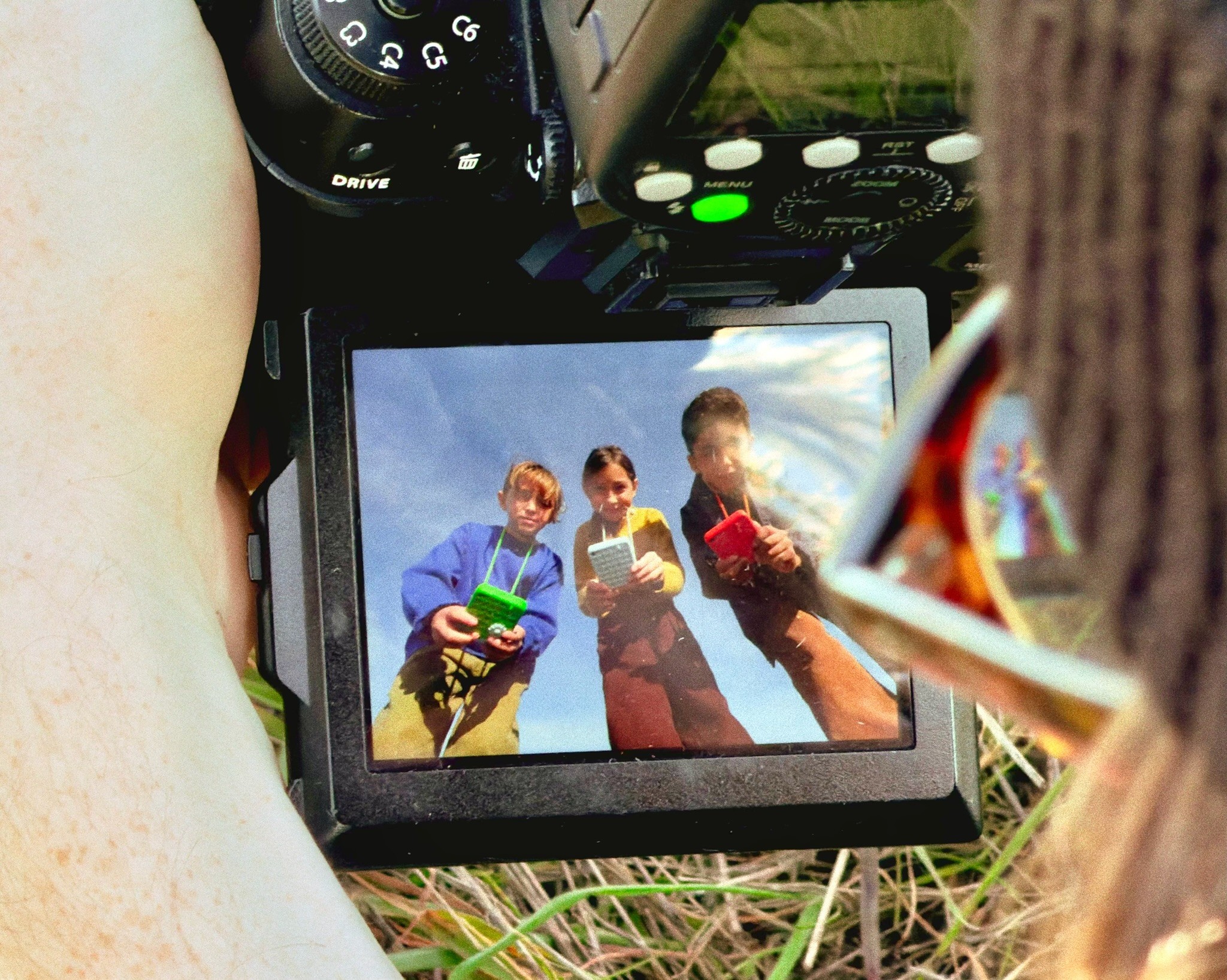
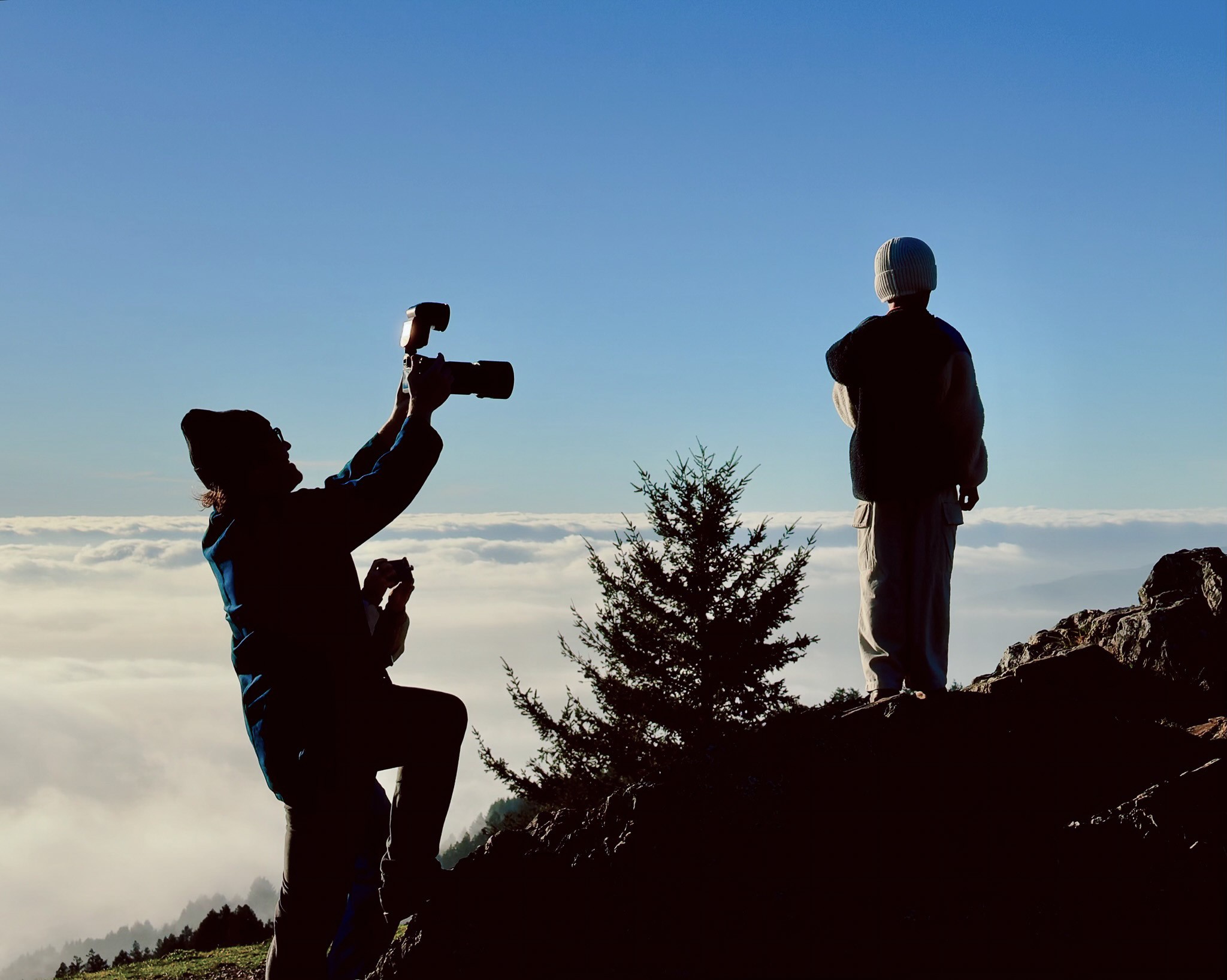
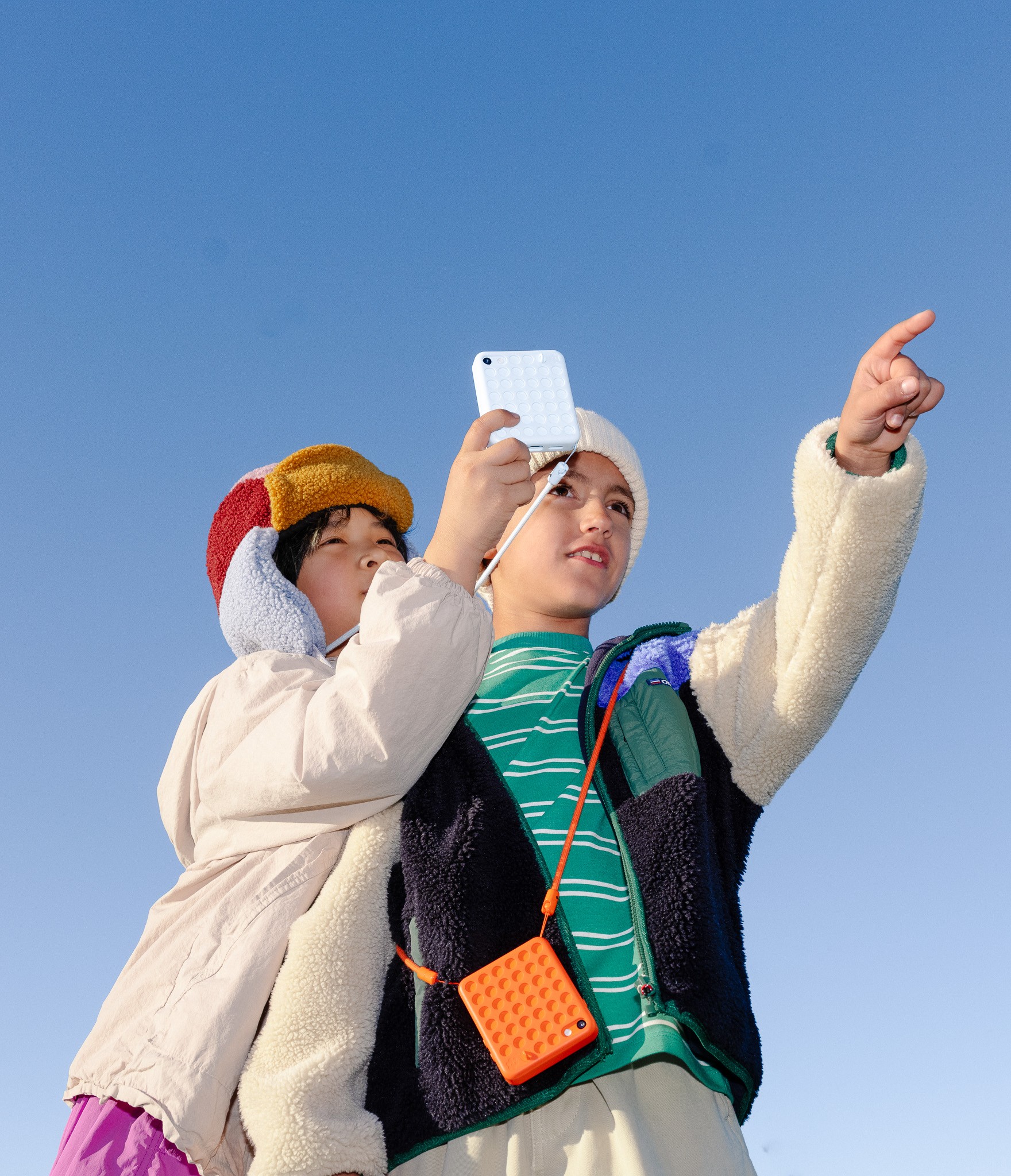
Image by Charlie Schuck

Image by Charlie Schuck
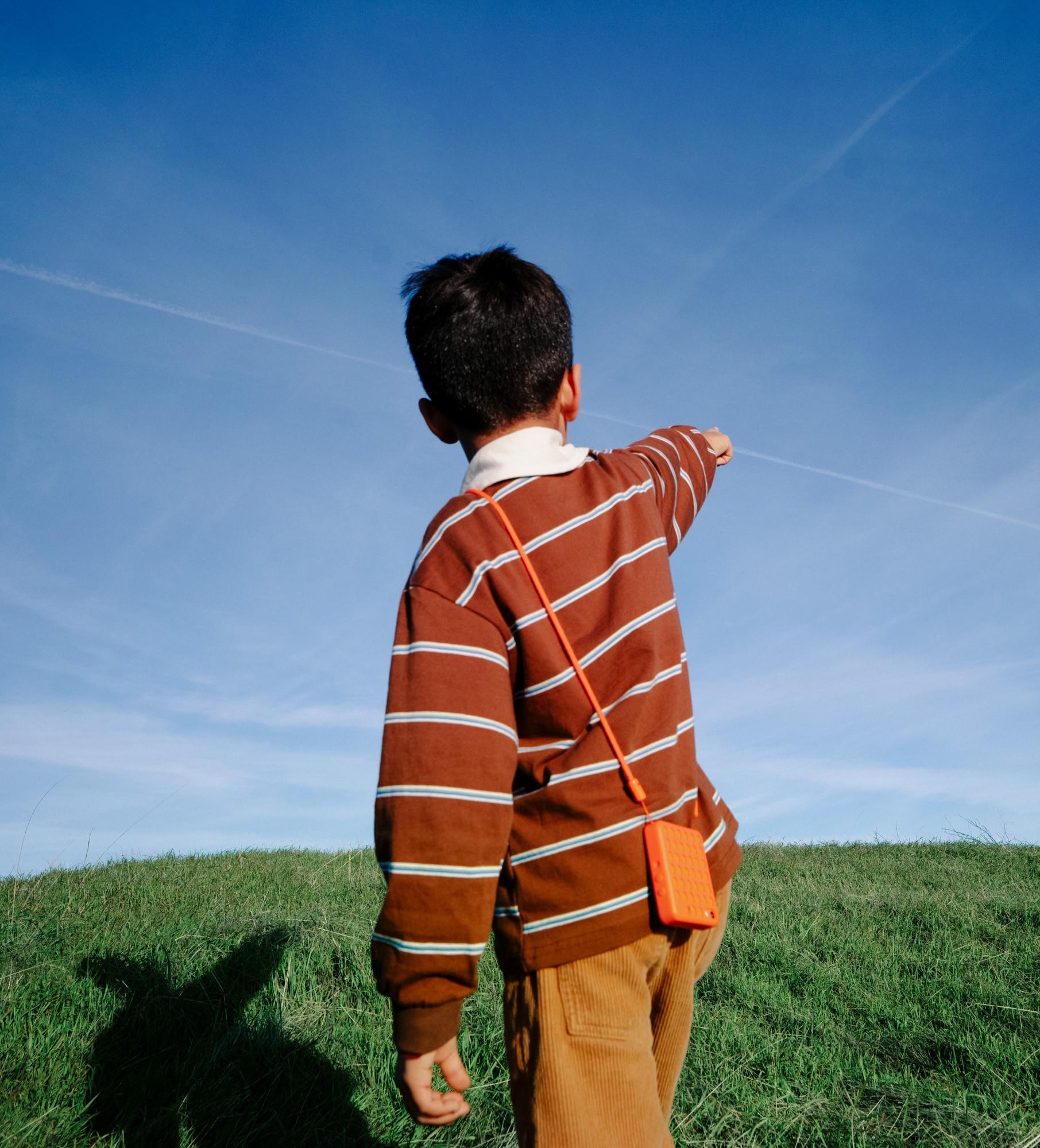
Image by Charlie Schuck
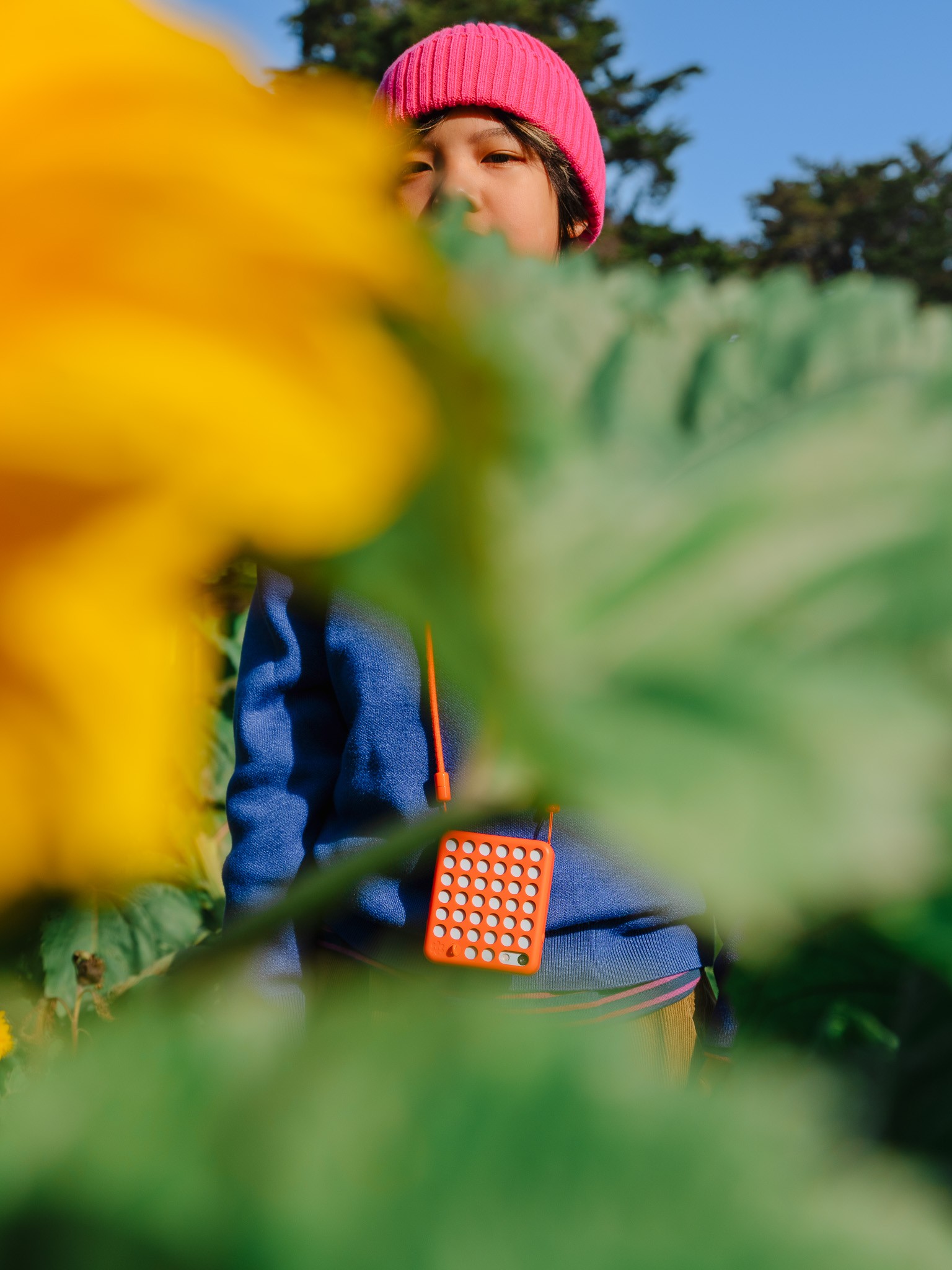
Image by Charlie Schuck
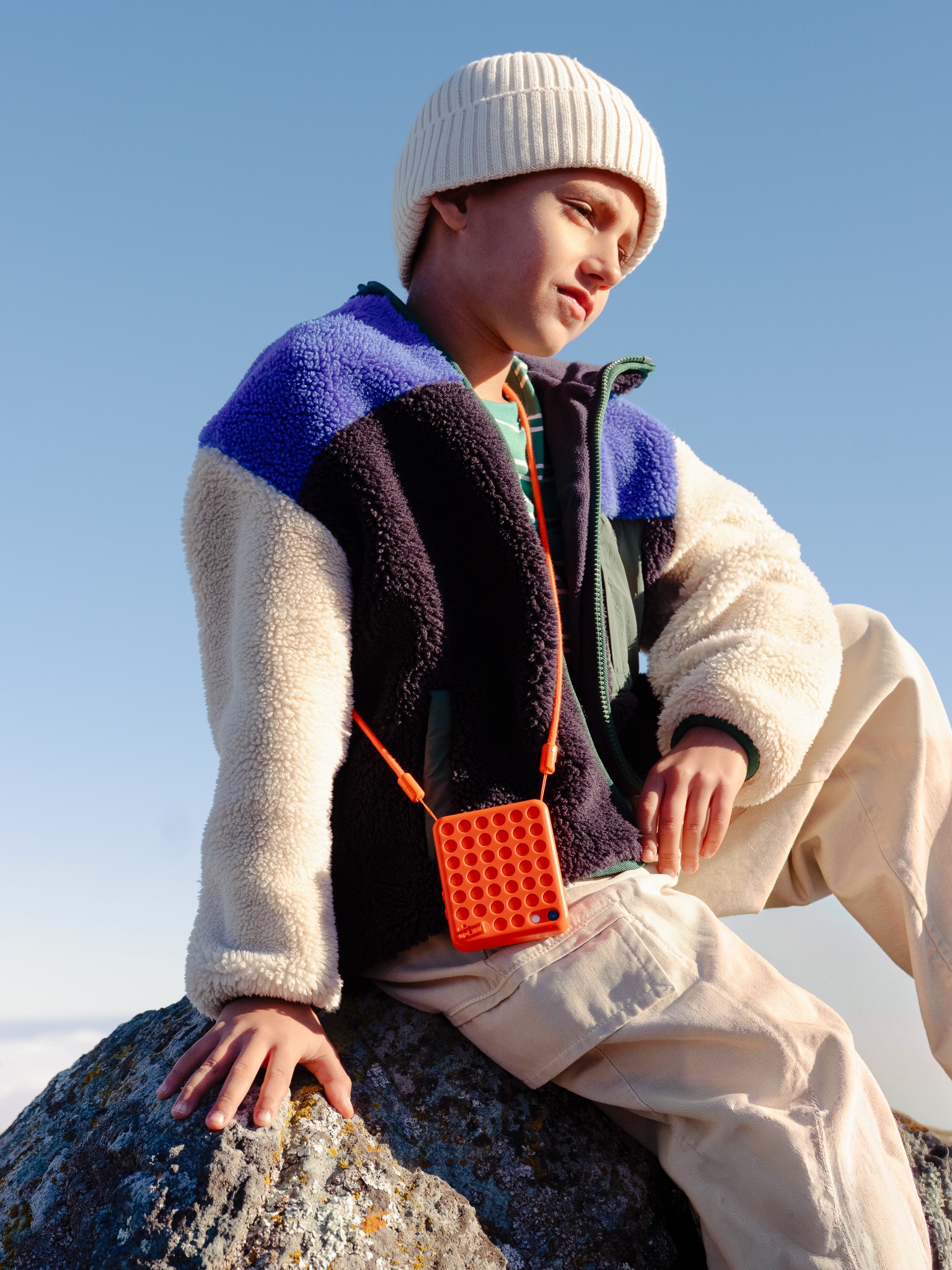
Image by Charlie Schuck
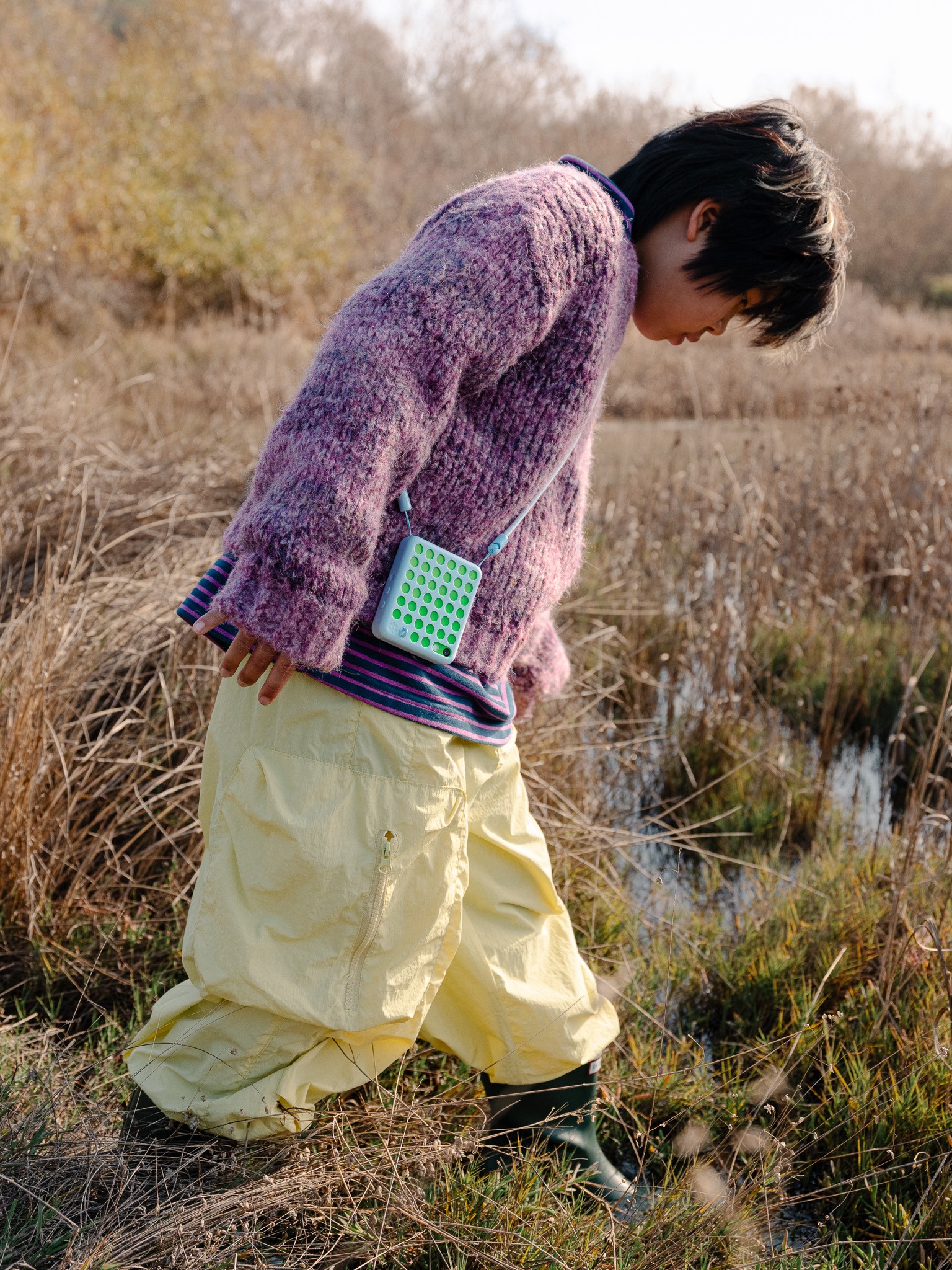
Image by Charlie Schuck
GET OUTSIDE
All these elements together helped unify Freckle’s perspective about a different relationship between a child, a computer and the world around them. We were fortunate that Sam trusted us enough not to divide those things into separate problems. To us, it’s always the world that precedes the product. The most radical thing about Freckle was not what was put into it, but what was left out. No infinite feed. No open web. No social media. Instead: a camera, a map, some money, your friends, a question, a mission, a way home.
The project began as an attempt to imagine technology appropriate for childhood. Somewhere along the way, we started thinking there was a different possible relationship to these devices available for everyone else.
One in which technology gives you an ability to wander further, notice something strange, figure something out yourself, and occasionally get lost. And keep going.
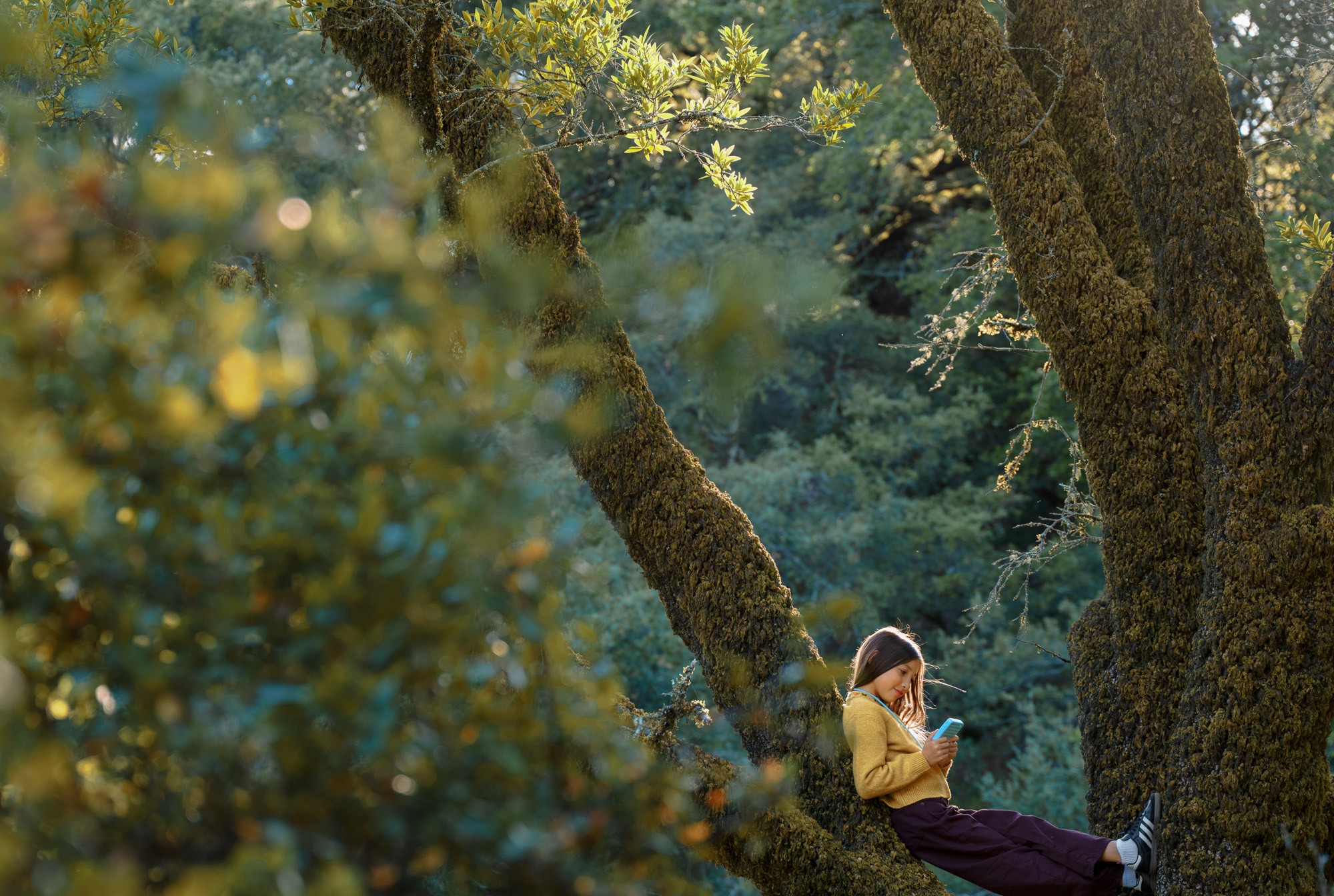
Image by Charlie Schuck
Credits
Freckle Team: Sam Terris (Founder), Jon Liang (Lead Engineer), Kory Westerhold (UI/UX)
Industrial Design: Body Shop
Creative Direction: Body Shop
Stylist: Body Shop
Photography: Charlie Schuck, Charlie Dixon
Retouching: Body Shop
CGI: Body Shop